Something in the Air: How Your Skincare's Scent Profile Is Quietly Defining Your Whole Vibe
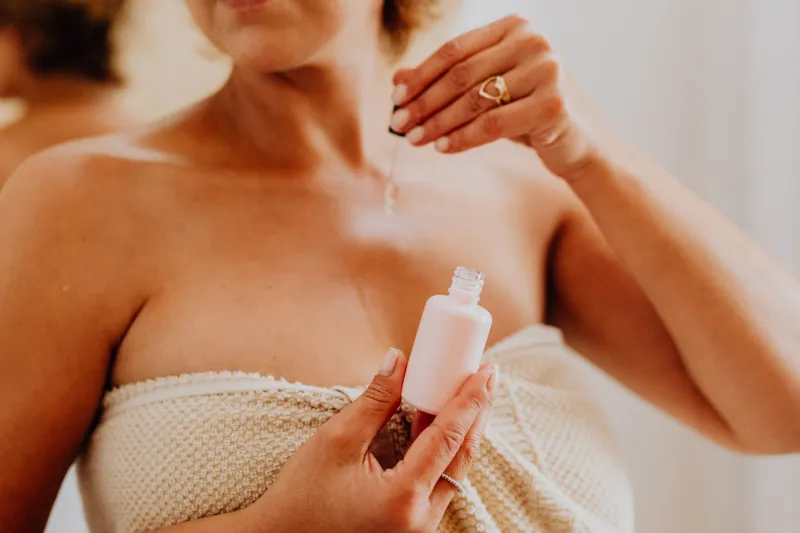
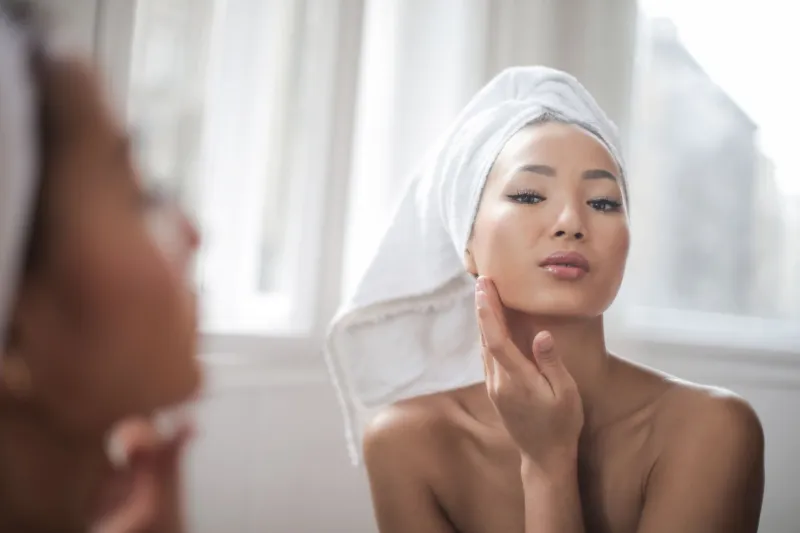
You've spent real time curating your skincare lineup. You know which vitamin C serum plays nicely with your moisturizer, which retinol to use on alternate nights, and which SPF doesn't pill under foundation. But there's one thing most of us never think to audit: what that whole routine actually smells like once it's all on your face.
Because here's the thing — your skincare isn't odorless. Not even close. That gentle cleanser has a faint herbal note. Your niacinamide serum has that slightly medicinal edge. Your rich nighttime cream smells vaguely of roses and something almost buttery. Stack them all together, and you've accidentally created a scent cocktail that's going out into the world with you every single day.
Welcome to what we're calling the Fragrance Layer Effect.
Why Skincare Scent Is a Thing We Need to Talk About
The beauty industry has spent decades training us to think about fragrance as a separate category — something you apply, not something your routine creates. But the reality is that most skincare products, even fragrance-free ones, carry some kind of olfactory identity. Ingredients have scents. Preservatives have scents. Carrier oils, botanical extracts, even certain active acids have distinct aromatic signatures.
When you layer five or six products in a row, those individual scents don't just disappear. They interact. Some blend beautifully into something that reads as clean, fresh, and subtly luxurious. Others... don't. You've probably had a day where something about your routine just smelled a little off and you couldn't figure out why. That's the Fragrance Layer Effect working against you.
And it doesn't stop at your skincare. If you're adding a perfume or a body mist on top of all that, you're working with an even more complex aromatic equation — one that can either elevate your signature scent or completely muddy it.
The Psychology Behind Beauty Scent (It's Not Just Aesthetic)
Here's where it gets genuinely interesting. Research in sensory psychology has shown that scent is one of the most powerful drivers of perception and memory. The way something smells influences how we feel about it — and how others feel about us when we're near them.
In a beauty context, this means the aromatic experience of your skincare routine is actually shaping how people perceive your overall grooming and presence, even if they can't consciously identify why. A routine that smells cohesive and pleasant gives off an air of intentionality. One that smells like a lab accident — even if the products are technically excellent — can create a subtle sense of something being off.
There's also the self-perception angle. The scent of your routine affects your own mood and confidence more than you'd think. That's partly why a lot of people describe their nighttime skincare ritual as calming — it's not just the act of caring for your skin, it's the familiar, comforting scents that signal to your brain that it's time to wind down. Your morning routine's scent profile, on the other hand, can actually prime you for the day. Citrus and green notes tend to feel energizing. Heavy florals or musks in the morning can feel a little disorienting, like wearing your pajamas to a meeting.
When Good Products Smell Bad Together
So what actually causes the clashing? A few things.
First, there's ingredient interaction. Certain actives — especially acids like glycolic or lactic — have a faintly sour or chemical smell on their own that can intensify when layered with products containing strong botanical fragrances. Vitamin C serums, particularly those with L-ascorbic acid, are notorious for this. On their own, they might smell faintly citrusy or slightly metallic. Paired with a heavily scented moisturizer, they can produce something genuinely unpleasant.
Second, there's the issue of scent families clashing. Just like you wouldn't necessarily wear a heavy oud perfume with a bright, fresh cologne, layering a eucalyptus-heavy toner under a deep vanilla-scented night cream is going to create some olfactory dissonance.
Third — and this one gets overlooked — is perfume compatibility. If your moisturizer already has a strong rose or jasmine note and you're spritzing on a musky floral perfume over it, you might be doubling down on certain notes in a way that tips from sophisticated into overwhelming.
How to Build a Routine That Smells as Good as It Works
You don't need to overhaul everything. A few intentional choices go a long way.
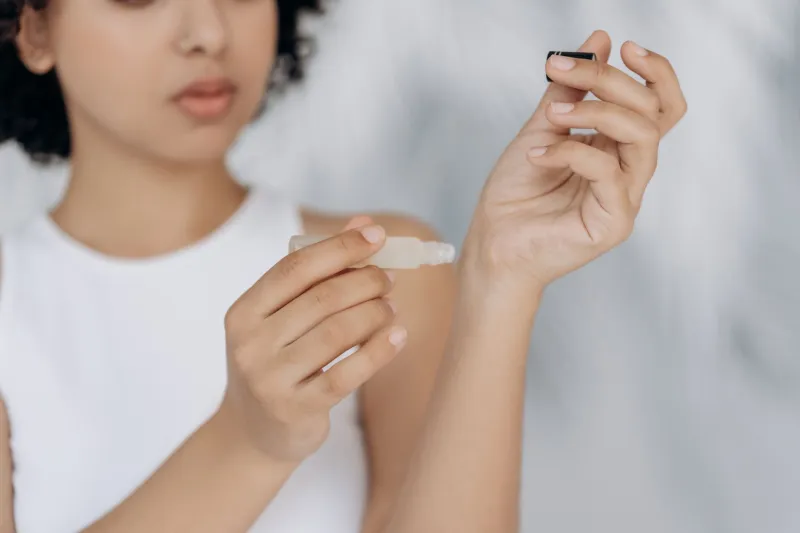
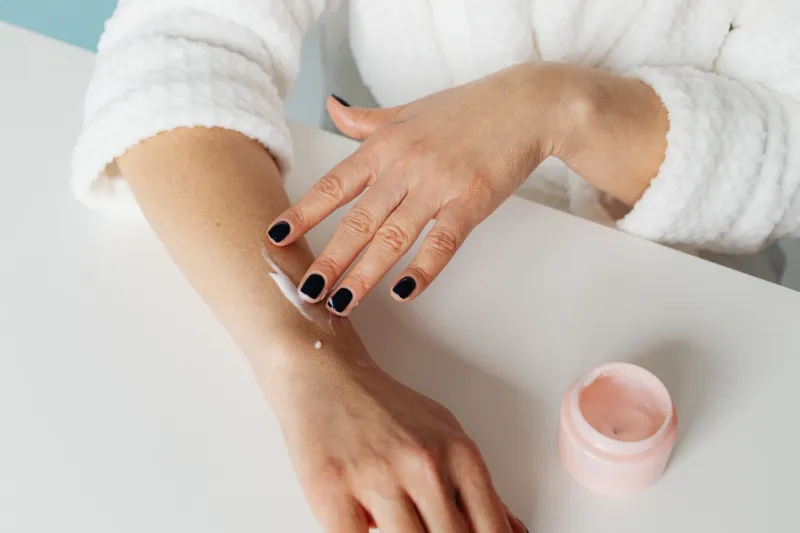
Start by doing a smell audit. Seriously — grab your products and sniff them in the order you apply them. Not individually, but layered. Apply them one by one onto the back of your hand and give it a moment. Does the end result smell pleasant? Neutral? Like something you'd rather not put on your face?
Group your products by scent family where possible. If your toner has a fresh, watery quality, pair it with a serum and moisturizer that stay in that clean, light lane rather than jumping to something heavily botanical or sweet. Consistency in scent profile makes the whole routine feel more intentional.
Give fragrance-free products a second look. There's a reason minimalist skincare routines often feel more effortless than elaborate ones — and it's not just the simplicity. When your products are mostly unscented or very lightly scented, the olfactory experience stays quiet and clean. Nothing clashes because there's nothing fighting for attention. It also gives your actual perfume (if you wear one) room to breathe and perform the way it was designed to.
Be strategic about where your perfume fits in. Apply it after your skincare has fully absorbed, and ideally to pulse points that aren't your face — your neck, wrists, the insides of your elbows. This keeps your skin's scent profile (which is a combination of your natural chemistry, your skincare, and your fragrance) layered in a way that makes sense rather than piling everything onto the same surface.
Consider the time of day. Heavy, rich-smelling products — think dense face oils or intensely botanical treatments — are better suited to nighttime when you're not adding perfume on top and you're not in close contact with other people for hours. Daytime products benefit from being lighter in both texture and scent.
The Effortless Skin Smell Is a Curated Thing
Here's the takeaway: that person you've encountered who just smells like great skin — clean, subtly glowy, like they've done something good for themselves without trying too hard — didn't arrive there by accident. That experience is the result of a routine where the scents are either working together or quietly staying out of the way.
Modern beauty is increasingly about intention over accumulation. More products don't automatically mean better results, and the same logic applies to scent. A thoughtfully edited routine that smells cohesive will always read as more polished than a cabinet full of competing aromas fighting for dominance on your face.
Your skin tells a story. Make sure the scent chapter is one you actually want people to read.