Your Skincare Already Has a Scent — Here's How to Make It Work With Your Perfume
There's a specific kind of magic that happens when someone walks into a room and the air just shifts. Not because they're wearing a lot of perfume — but because everything about their scent feels cohesive. Layered. Intentional. Like they spent the morning in a spa that knew exactly what it was doing.
Here's the thing: that effect almost never comes from a single fragrance. It comes from the way skincare, body products, and perfume work together — or, in a lot of cases, accidentally against each other. Most of us have never thought about our face wash having a scent profile. But it does. Your vitamin C serum? Definitely has a scent. Your SPF? Oh, it has a lot of scent.
So if you've ever wondered why your perfume smells slightly off by mid-morning, or why it never quite smells the same on you as it does in the bottle, your skincare routine might be the missing piece of that puzzle.
Why Skin Chemistry Changes Everything
Fragrance doesn't behave the same way on skin as it does on fabric, paper, or even in the air. Skin is warm, it's alive, and it has its own natural oils and pH that actively interact with every scent molecule that touches it. This is why the same perfume can smell completely different on two people — and why spraying it on your wrist at a department store is basically useless as a test.
Skin chemistry is personal. Factors like diet, hydration, hormones, and even stress can shift the way your natural scent profile reads underneath a fragrance. Add in a full skincare routine — toner, serum, moisturizer, SPF — and you've got multiple competing scent layers before your perfume even enters the picture.
The good news? Once you understand this, you can actually use it to your advantage.
The Psychology Behind Why Layered Scents Feel More Luxurious
There's real science behind why a well-composed scent experience feels so elevated. Scent is the sense most directly linked to memory and emotion — it bypasses the rational brain and goes straight to the limbic system, which is responsible for how we feel. A layered scent that unfolds over time mimics the structure of a fine fragrance, with top notes that fade and deeper base notes that linger.
When your skincare and perfume work in harmony, you're essentially building a fragrance pyramid on your skin in real time. Your lightweight citrus toner might echo the bergamot in your perfume. A musk-forward moisturizer can extend the dry-down of a floral scent for hours longer than it would last otherwise. A botanical face oil with rose or neroli? That's a top note doing double duty.
This is what spa scent design actually does — it layers complementary notes across products so the experience feels rich without ever feeling overwhelming.
Notes That Play Well Together (And Ones That Don't)
Not every combination is going to work, and that's okay. The goal isn't to match your skincare and perfume exactly — that would just be redundant. The goal is harmony, where each element enhances rather than competes.
Botanicals and florals are some of the easiest to layer. If your skincare leans into ingredients like rose water, chamomile, or green tea, it'll naturally complement floral and green fragrances. Think light, airy perfumes with jasmine, peony, or iris.
Musks are your best friend when it comes to extension. Fragrance-forward moisturizers or body lotions with soft musk bases essentially act as a primer for your perfume, giving it something to hold onto and helping it last longer on skin. Musks read as clean and skin-like, so they rarely clash — they just amplify.
Citrus notes are trickier because they're highly volatile, meaning they fade fast. If your skincare has citrus elements (vitamin C serums often do), they'll interact with the top notes of your perfume and then disappear. That can actually be beautiful — a burst of brightness that settles into something warmer — but it means your perfume's dry-down needs to be something you also love.
Where things get complicated is with heavily fragrant skincare that has no clear note direction. A lot of mass-market products use synthetic fragrance blends that don't correspond to any traditional perfumery notes — they just smell clean or fresh in a vague, chemical way. These can muddy a more sophisticated perfume. If you're serious about your scent layering, it might be worth reaching for fragrance-free or lightly scented skincare as your base, then building intentionally from there.
A Simple Routine for Building Your Scent Layer
You don't need to overhaul your entire collection to make this work. Start here:
Step 1: Take inventory. Smell your skincare products individually. Really smell them. Write down what you notice — is it floral? Earthy? Clean and soapy? Citrusy? You're essentially building a scent map of your current routine.
Step 2: Identify your perfume's family. Is it a woody oriental? A fresh aquatic? A soft floral? Knowing this helps you figure out which of your skincare products might support it versus clash with it.
Step 3: Apply in order of weight. Lighter, water-based products first, then oils, then your heavier moisturizer or SPF. Apply your perfume last, after everything has had a moment to absorb. Pulse points — wrists, neck, the inside of your elbows — are warm spots that help diffuse scent naturally.
Step 4: Let it settle. Give yourself five to ten minutes before you walk out the door. Fragrance needs time to develop on skin, and the combination of your skincare and perfume will smell different at the five-minute mark than it does immediately after application.
The Products Worth Paying Attention To
If you want to get intentional about this without starting from scratch, focus on your body lotion or oil — it covers the most surface area and has the most impact on how your perfume performs throughout the day. A musk-based or lightly botanical lotion is almost universally flattering under most fragrance families.
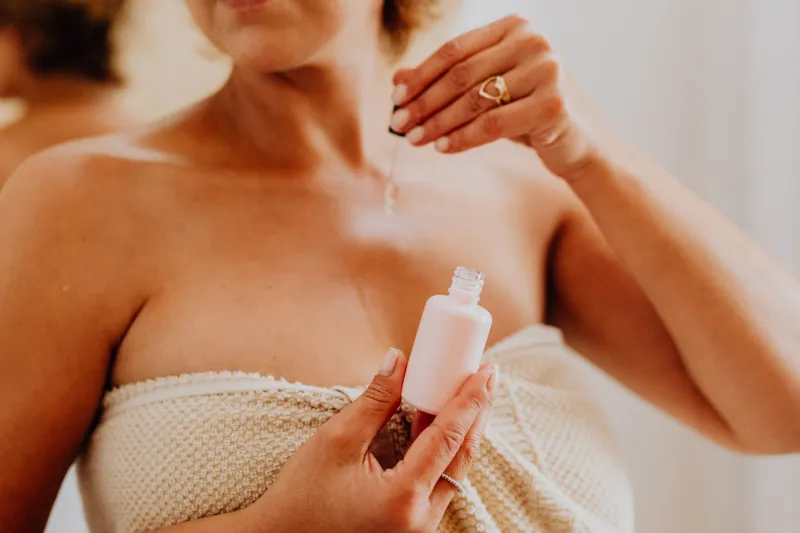
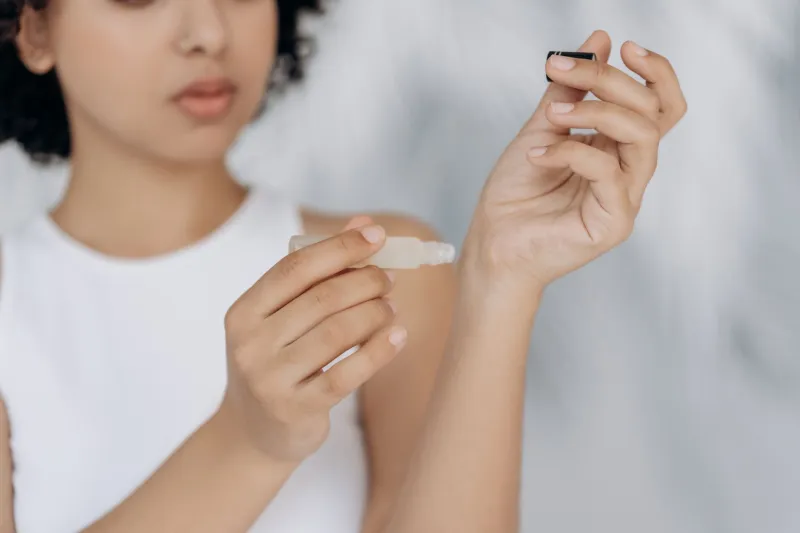
Face oils are another underrated layering tool. Many of them use real plant-derived ingredients — rosehip, marula, jojoba, neroli — that carry genuine aromatic character. A face oil with neroli or rose can add a beautiful complexity to a fragrance that already leans floral or citrus.
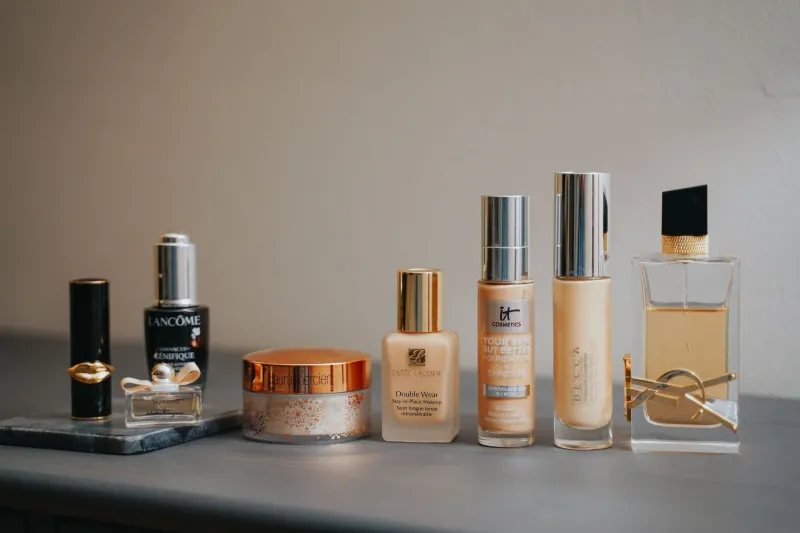
And if you love a specific perfume and want it to really last, look for body products from the same fragrance house. A lot of brands now offer matching shower gels, lotions, or hair mists — and layering within the same scent family is the most foolproof way to get that spa-level effect.
The Takeaway
Your beauty routine is already a sensory experience. You're cleansing, treating, moisturizing, and protecting — and every single one of those steps has a scent attached to it. The difference between a routine that smells like a jumble of products and one that smells like you, but elevated, is just a little bit of intention.
You don't have to be a perfumer to make this work. You just have to start paying attention to what you're already putting on your skin — and decide whether it's working with your signature scent or quietly undermining it. Once you start noticing, you really can't stop.