Squalane Is in Everything Right Now — Here's What It's Actually Doing for Your Skin
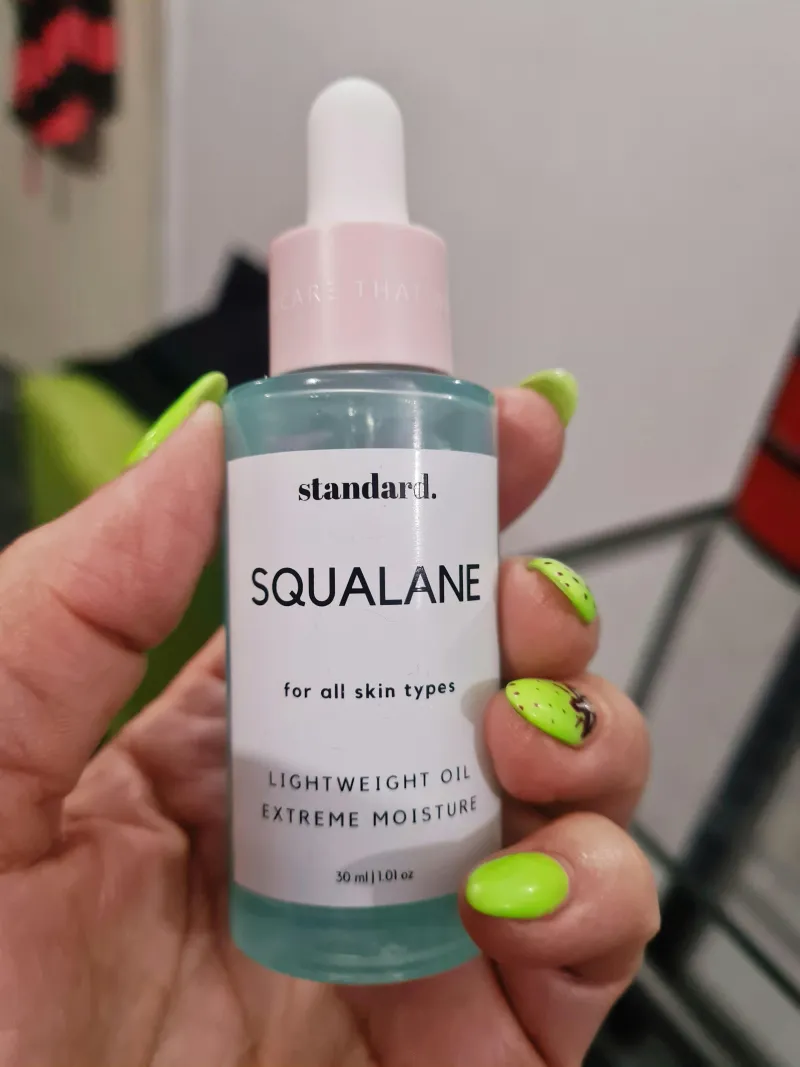
Photo: squalane skincare oil dropper bottle clean beauty flatlay, via judgeme.imgix.net
At some point in the last few years, squalane showed up everywhere. It's in serums, cleansing oils, lip products, hair treatments, and moisturizers across every price point — from the $8 bottle at Trader Joe's to the $90 face oil from a prestige brand. It became a buzzword in clean beauty circles, a staple in minimalist skincare routines, and a go-to recommendation from basically every esthetician on the internet.
But here's the thing about ingredients that get this much hype: it becomes genuinely hard to tell what they actually do. So let's slow down and actually look at squalane — what it is, how it works, who benefits most from using it, and whether you actually need it in your routine.
First, What Even Is Squalane?
Squalane (with an a) is a stable, saturated version of squalene (with an e). That distinction matters. Squalene is a lipid that your body actually produces naturally — it's a component of your skin's sebum, which is the oil your skin makes to keep itself moisturized and protected. The problem with squalene in skincare is that it oxidizes quickly, meaning it goes rancid and can actually clog pores or irritate skin.
Squalane is the hydrogenated, stabilized version. It has the same fundamental chemistry but none of the instability. It can be derived from several sources — historically from shark liver oil (a major reason the clean beauty industry pushed for alternatives), but today most cosmetic squalane comes from plant sources like sugarcane, olive, or amaranth. If you see "100% plant-derived squalane" on a label, that's what they're referring to.
Because your skin already recognizes squalene as something it produces naturally, squalane is exceptionally well-tolerated. It's non-comedogenic, meaning it doesn't clog pores, and it's one of the most universally gentle moisturizing ingredients in modern skincare.
What It Actually Does
Squalane is primarily an emollient. In plain terms: it softens and smooths the skin's surface by filling in the gaps between skin cells, which helps reduce transepidermal water loss — the process by which your skin loses moisture to the air around it. It's not a humectant (it doesn't draw water in like hyaluronic acid does), and it's not an occlusive (it doesn't form a heavy barrier like petrolatum). It sits comfortably in the middle, making it a genuinely versatile ingredient.
What people tend to notice when they start using squalane: skin feels softer and less tight, fine lines look a little less pronounced (because plumper, well-moisturized skin just looks smoother), and their overall complexion has a quiet luminosity. It also has some antioxidant properties, which means it offers mild protection against environmental stressors.
It absorbs relatively quickly and doesn't leave a greasy residue — which is part of why it became such a hit with people who had previously avoided facial oils.
How Does It Compare to Other Hydrating Ingredients?
This is where people get confused, because squalane is often marketed alongside hyaluronic acid, ceramides, and glycerin — and they all do different things.
Hyaluronic acid is a humectant. It pulls moisture from the environment (and sometimes from deeper skin layers) into the outer layers of skin. It works best in humid climates or when layered under a moisturizer that seals it in.
Ceramides are structural — they're the lipids that hold your skin barrier together. They're especially important for compromised or sensitized skin.
Glycerin is another humectant, excellent at drawing in moisture, and it's one of the most effective and affordable hydrating ingredients out there.
Squalane sits alongside these rather than competing with them. It works especially well layered over a humectant like hyaluronic acid or glycerin, locking in that moisture without suffocating the skin. Think of it as the finishing piece in a hydration routine, not the whole thing.
Who Actually Benefits From It?
Honestly? Most people. But let's get specific.
Dry skin types will probably notice the most immediate difference — the emollient effect is especially satisfying for skin that feels tight, flaky, or rough.
Oily and acne-prone skin is where squalane surprises people. Because it's non-comedogenic and lightweight, many people with oilier skin find that it actually helps regulate oil production over time. When your skin is properly moisturized, it doesn't need to overproduce sebum to compensate.
Sensitive skin almost universally tolerates squalane well. It doesn't contain fragrance, it doesn't irritate, and its similarity to the skin's own lipids makes it about as gentle as an ingredient can be.
Mature skin benefits from the plumping, smoothing effect and the antioxidant properties.
The one skin type that might find pure squalane less transformative is normal, well-hydrated skin — though even then, it can be a nice addition during drier months.
How to Actually Use It
Squalane is flexible in terms of where it lands in your routine. As a pure oil, it generally goes near the end — after your water-based serums, before or mixed into your moisturizer. A few drops is all you need; you don't need to drench your skin.
You can also mix a drop into your foundation for a more skin-like finish, use it as a lip treatment, or apply it to dry ends of hair. It's one of those rare ingredients that genuinely multitasks without drama.
Products Worth Trying at Every Price Point
If you want to try it without committing to a full routine overhaul, a pure squalane oil is the most direct way to see what it does for your skin.
- Budget: Trader Joe's Squalane Facial Oil ($8) — basically a cult product at this point, and it's pure squalane with no extras. Hard to beat.
- Mid-range: Biossance 100% Squalane Oil ($32) — one of the brands that really put sugarcane-derived squalane on the map. Clean formula, lovely texture.
- Splurge: The Ordinary's Squalane Cleanser ($9.90) is technically budget, but their pure squalane ($9.80) is equally excellent — and if you want to go more luxurious, Tatcha's Violet-C Brightening Serum incorporates squalane beautifully alongside vitamin C.
So, Do You Actually Need It?
Need is a strong word in skincare. But squalane earns its hype more than most ingredients. It's gentle enough for almost everyone, versatile enough to fit into almost any routine, and effective in a quiet, consistent way that doesn't overpromise. It's not going to resurface your skin or fade dark spots — but if your goal is softer, more comfortable, well-moisturized skin with a natural glow, it genuinely delivers.
For a lot of people, squalane is the ingredient that makes the rest of their routine work better. And in skincare, that's about as good an endorsement as anything can get.