Scared of Your Own Serum? How the Internet Turned Ingredient Labels Into Horror Stories
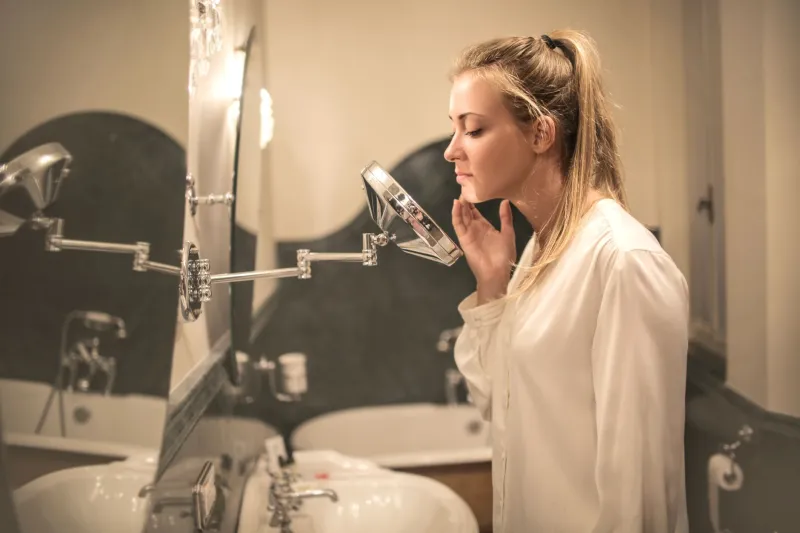
It starts innocently enough. You flip over your moisturizer, squint at the ingredient list, and type one word into your search bar. Forty-five minutes later you're convinced your face wash is slowly poisoning you, you've added three "clean" alternatives to your cart, and you've somehow ended up watching a TikTok about endocrine disruptors at 11:47 PM.
Welcome to ingredient anxiety — the unofficial side effect of beauty education in the social media era.
Here's the thing: knowing what's in your products is genuinely useful. But somewhere between empowerment and panic, a lot of us took a wrong turn. Ingredient literacy was supposed to make us smarter shoppers. Instead, it's making a whole lot of people terrified of perfectly functional, well-researched products — and dermatologists are quietly losing their minds over it.
The Most Feared Ingredients That Are Actually Fine
Let's start with the big ones. Parabens have been villain-coded for over a decade. The fear traces back to a 2004 study that found paraben traces in breast tissue samples. Sounds alarming, right? Except that study didn't establish that parabens caused anything — it just detected their presence. Multiple large-scale reviews since then, including assessments from the FDA and the EU's Scientific Committee on Consumer Safety, have concluded that parabens used in cosmetics at approved concentrations don't pose a meaningful health risk.
The concentration piece matters enormously, and it's where most internet takes fall apart.
Fragrance is another one. Yes, synthetic fragrance can trigger reactions in people with specific sensitivities or allergies — that's real, and if you're one of those people, avoiding it makes sense. But the sweeping claim that fragrance is universally toxic? That's not what the science says. For the vast majority of people, fragrance in cosmetics is a cosmetic concern, not a health crisis.
Then there's mineral oil, which has been called everything from pore-clogging to carcinogenic online. Dermatologists and cosmetic chemists will tell you the opposite: cosmetic-grade mineral oil is one of the most well-tolerated, non-comedogenic moisturizing ingredients in existence. The confusion often comes from conflating industrial-grade mineral oil (a different beast entirely) with the highly refined version used in skincare.
Why Your Algorithm Is Not a Dermatologist
Here's something worth sitting with: social media platforms optimize for engagement, not accuracy. Fear performs. Outrage performs. "This common ingredient is secretly destroying your skin barrier" gets clicks. "This ingredient is fine for most people in standard concentrations" does not.
That creates a feedback loop where the most alarming content gets amplified, and the nuanced, evidence-based takes get buried. By the time a dermatologist posts a measured explainer, you've already seen fourteen TikToks telling you to throw out everything with a name you can't pronounce.
Influencers — even well-meaning ones — often lack the toxicological training to contextualize ingredient safety. They read the same Reddit threads you do, add their own spin, and present it as expertise. That's not shade, it's just the structure of how information moves online. Knowing that structure helps you navigate it.
The Dose Is the Point (And Nobody Talks About It)
One of the most important concepts in toxicology — and one that almost never makes it into beauty content — is that the dose makes the poison. Nearly anything is harmful at a high enough concentration. Water can kill you if you drink enough of it. That doesn't make water dangerous.
When you see a study cited to prove an ingredient is harmful, the first questions to ask are: what concentration was used? Was this a cell culture study, an animal study, or a human clinical trial? Was the exposure route the same as topical cosmetic application? A lot of ingredient fear is built on studies that used concentrations hundreds of times higher than what's in your toner, or that involved ingestion rather than skin contact.
This isn't about dismissing safety concerns — it's about evaluating them proportionally.
What's Actually Worth Paying Attention To
Not everything is fine, and we're not here to tell you to ignore all red flags. Some ingredients genuinely warrant caution for specific populations:
- Retinoids during pregnancy — this one is real and well-established. If you're pregnant or trying to conceive, talk to your OB before continuing any retinol or prescription retinoid.
- High-concentration chemical exfoliants used too frequently — not because the ingredients are dangerous, but because misuse can genuinely compromise your skin barrier.
- Essential oils for people with reactive or sensitive skin — again, not universally harmful, but worth a patch test if your skin has a history of reacting to things.
- Certain sunscreen filters — the FDA has asked for more data on some chemical UV filters, which is different from saying they're unsafe. That's the regulatory process working as intended.
The pattern here is context. These aren't blanket bans — they're situations where specific circumstances change the calculus.
How to Actually Evaluate an Ingredient Claim
Next time you fall down a rabbit hole, try running the claim through a few filters before you spiral:
Who's making the claim, and what's their training? A board-certified dermatologist or cosmetic chemist carries more weight than a content creator with a "holistic wellness" brand to sell.
Is there a financial incentive? A huge amount of ingredient fear is manufactured or amplified by brands selling "cleaner" alternatives. Follow the money.
What does the primary research actually say? Tools like PubMed let you look up actual studies. Look for systematic reviews and meta-analyses over single studies, and check sample sizes.
Is the risk theoretical or demonstrated? A lot of online ingredient panic is built on theoretical mechanisms — "this could disrupt hormones under certain conditions" — rather than demonstrated real-world harm.
The Bigger Picture
Ingredient literacy is genuinely a good thing. Understanding what you're putting on your skin helps you make choices that work for your skin, your sensitivities, and your values. But there's a version of it that tips into anxiety-driven consumption — constantly cycling through products, spending more on "clean" reformulations of things that were fine to begin with, and never actually trusting anything long enough to see results.
Your dermatologist isn't ignoring the research. They've read more of it than any Reddit thread has. And most of them will tell you the same thing: stress is one of the most documented triggers for skin issues. The irony of ingredient anxiety is that the stress it creates might actually be doing more damage than the ingredients you're worried about.
Know your skin. Do your research — real research. And maybe close the tab before the algorithm takes you somewhere you don't need to go.