The Harder Easy: Why Barely-There Makeup Is the Most Technically Demanding Look You'll Ever Attempt
There's this pervasive idea floating around beauty culture that minimal makeup is the lazy option — the choice you make when you don't have time, don't have the skills, or just don't care enough. And honestly? That idea is completely backwards. The truth is that a convincing no-makeup makeup look is one of the most technically demanding things you can do with a beauty kit. It requires precision, product fluency, and an almost architectural understanding of how light interacts with your specific face.
Full glam has a built-in safety net. Heavy coverage, bold liner, a statement lip — these elements draw the eye and create their own drama. Imperfections get absorbed into the overall composition. But strip all of that away, and suddenly every product decision is exposed. There's nowhere to hide.
Why 'Natural' Is Actually a Performance
Let's be clear about what no-makeup makeup is actually trying to do: it's creating the illusion of bare skin while quietly correcting, evening, and enhancing everything it touches. That's not simplicity — that's sleight of hand. And like any good illusion, it takes serious technique to pull off.
The goal isn't to look like you're wearing nothing. It's to look like you naturally have great skin, naturally flushed cheeks, and naturally defined eyes. Your skin doesn't actually do any of those things on its own — at least not consistently. So you're essentially building a very convincing replica of effortlessness, which requires knowing exactly what effortlessness is supposed to look like in the first place.
This is why the look tends to fall apart on people who approach it casually. A shade of concealer that's even slightly too light or too peachy immediately reads as "I tried to cover something up." A blush applied even a little too heavily tips from "natural flush" into "obvious blush." The margins for error are incredibly thin.
The Product Layering Game Is Real
One of the biggest misconceptions about minimal makeup is that it uses fewer products. For a truly polished no-makeup finish, you're often using more products — just each one in smaller, more intentional amounts.
A typical approach might look something like this: a skin-tint or sheer foundation blended with fingers for warmth and natural finish, followed by a precise swipe of color-corrector only where you genuinely need it, then a light concealer tapped — not rubbed — under the eyes and around the nose. A cream bronzer pressed into the hollows of the face with a damp sponge to mimic a real shadow. A gel blush stippled onto the apples of the cheeks and blended upward until it looks like circulation, not product. A brow gel that fills and grooms without drawing a single visible stroke. A barely-there lip tint. A single coat of brown-black mascara on upper lashes only.
That's eight products minimum. And each one has to be the right product — the wrong formula at any step collapses the whole thing.
Texture Is Everything
Full glam is relatively forgiving when it comes to texture. Powders, mattes, and layered products create a kind of visual density that reads as intentional. Minimal makeup operates on completely different rules. Everything needs to look like skin — which means texture choices become critical.
Cream and liquid formulas are your best friends here. They blend into the skin rather than sitting on top of it. Powder products, especially applied over multiple layers, can start to look cakey or mask-like the moment the lighting changes — and no-makeup makeup cannot survive bad lighting. It needs to hold up everywhere: in natural light, overhead office lighting, and yes, even under a phone camera.
This is also why skincare prep is genuinely non-negotiable for this look in a way it isn't for heavier makeup. A full coverage foundation can bulldoze through dry patches and texture. A skin tint cannot. If your skin isn't hydrated, smooth, and primed, the minimal approach will highlight every flaw rather than quietly smoothing them over.
The Color Matching Problem
Here's where a lot of people quietly struggle: no-makeup makeup requires a level of color accuracy that most people never bother to develop because heavier makeup doesn't demand it.
When you're wearing a bold red lip or a smoky eye, the statement elements of the look carry the weight. Nobody's scrutinizing whether your concealer is 0.5 shades too warm. But in a minimal face, the concealer is the look. And a concealer that doesn't match your skin tone precisely — in undertone, not just depth — will immediately signal "makeup" in exactly the way you're trying to avoid.
This means you actually need to know your undertone. Not just warm or cool, but specifically whether you run yellow, golden, peachy, pink, or neutral. You need to understand how your skin changes between winter and summer. You need to know whether your undereye area runs darker blue, purple, or brown, because that determines whether you're color correcting with peach, orange, or simply using concealer alone.
None of this is required knowledge for full glam. It's absolutely required here.
The Skill Set Nobody Talks About
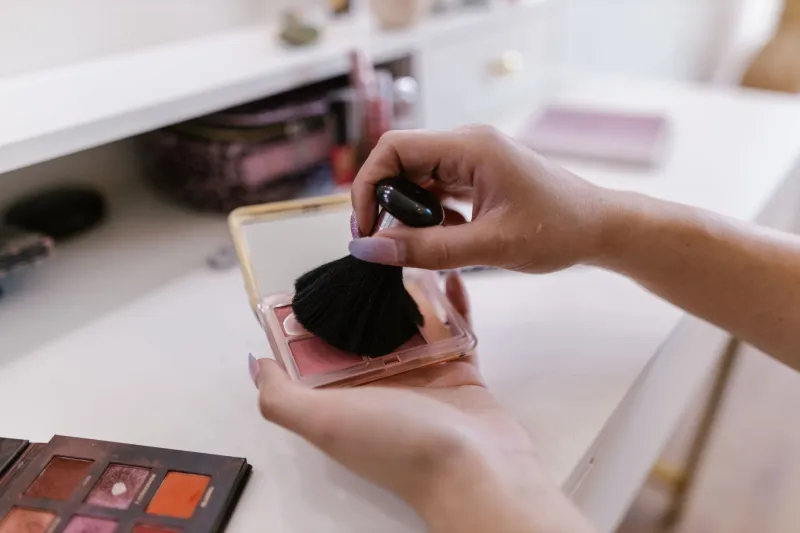
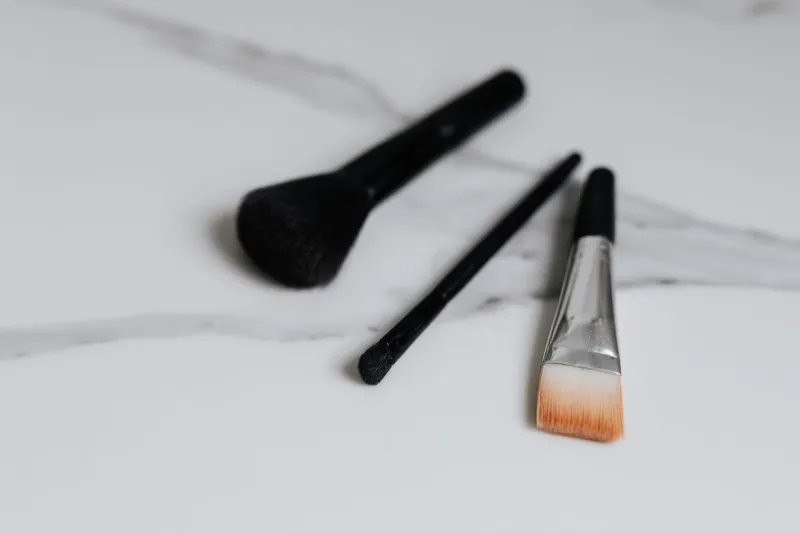
Beyond products, no-makeup makeup demands a specific physical application skill set. Finger blending is an art — too much pressure and you move the product around without building coverage; too little and you get streaks. Knowing when to use a brush versus a sponge versus bare fingers for each individual product is something that takes real practice to develop.
There's also the question of timing. Cream products need to be blended while they're still workable, which means working quickly and in sections. Layering too fast causes pilling; waiting too long makes blending nearly impossible.
The people who make this look seem effortless have usually spent significant time figuring out what doesn't work — wrong products, wrong tools, wrong order of operations. The breezy result you see is the product of a lot of deliberate, unglamorous trial and error.
So Why Bother?
Because when it works, it works. A well-executed no-makeup face has a quality to it that no amount of full coverage or dramatic technique can replicate — it looks like you, just on your best possible skin day. It's versatile in a way that heavy makeup isn't. It works in professional settings, on dates, at the farmers market, and in photos. It ages well throughout the day without requiring touch-ups that reveal the architecture underneath.
And honestly, mastering it makes you a better makeup artist overall. Understanding how to work with almost nothing forces you to understand your face on a deeper level — where you actually need coverage, where you need color, where your face naturally has dimension and where it needs help. That knowledge doesn't go away when you pick up a full face of products.
Minimal beauty isn't the easy route. It's the precise one. And precision, it turns out, is the most demanding skill set in the kit.